


Continuous Visibility Between Visits, Without Adding Staff.

Remote Patient Monitoring reimburses practices for collecting and reviewing physiologic data such as blood pressure, glucose, weight, SpO2 that too between visits, and for the clinical time spent acting on it. CareNexa supplies the devices, monitors the data daily, and escalates anything concerning to your practice.

Eligibility Criteria

01.

Any patient for whom remote monitoring of physiologic data is medically necessary and ordered by their treating provider

02.

Does not require multiple chronic conditions like CCM; a single condition warranting monitoring (e.g., hypertension, diabetes, CHF) can qualify

03.

Patient consents to monitoring and agrees to use the supplied device

04.

At least 16 days of data transmission within a 30-day period is generally required to bill the device-supply code

Full CPT Code Breakdown

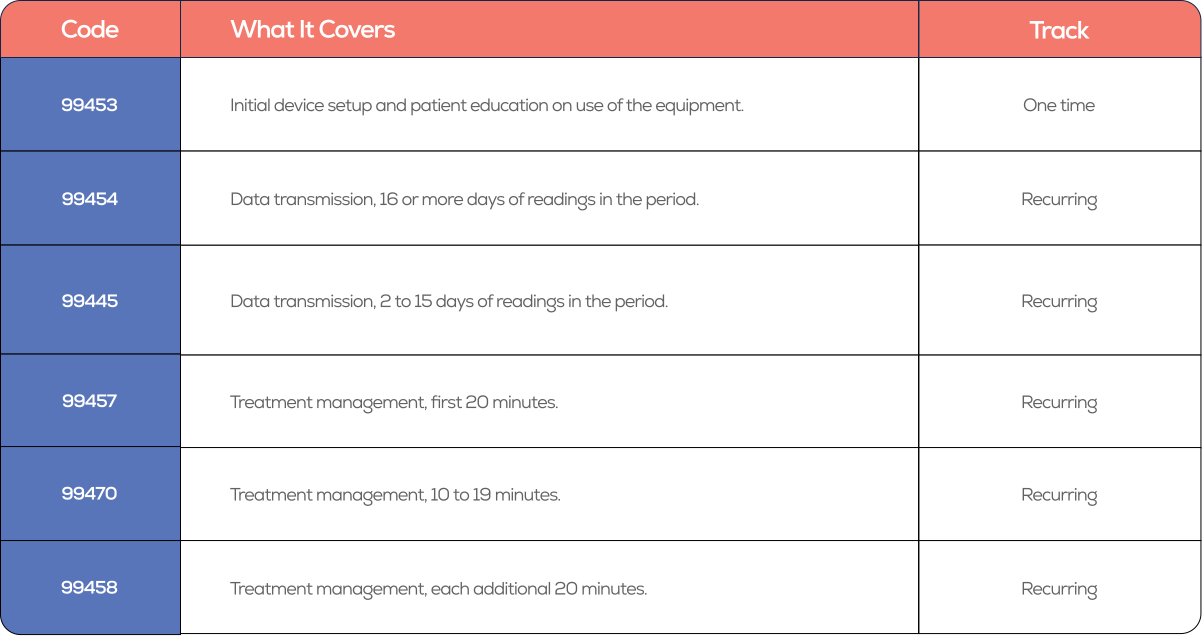
Every RPM code is defined by minutes of clinical staff time per calendar month. CareNexa’s coordinators log that time as the work happens & does not reconstructed it at month-end.  Your practice bills what was actually delivered, with the documentation already attached.

Patient eligibility

Patients whose condition benefits from regular vitals tracking outside the office. Common examples include hypertension, diabetes, congestive heart failure and COPD. 

What is included:

  • Continuous monitoring of vitals: blood pressure, glucose, weight and oxygen saturation 
  • FDA-cleared devices supplied at no cost to the practice 
  • Daily clinical staff review of transmitted data 
  • Automated escalation alerts 
  • Billing under the RPM codes 

Sample Patient Journey — Month to Month

Enrollment isn’t the finish line; it’s the start of a recurring monthly rhythm. Here’s what a typical CareNexa patient experiences from identification through ongoing care.

Month 0

Patient is identified, consented, and shipped an FDA-cleared monitoring device at no cost to the practice.

Week 1

Onboarding call walks the patient through device use; first readings begin transmitting automatically.

Ongoing

Clinical staff review incoming vitals daily; any reading outside the agreed threshold triggers an alert and clinical follow-up.

Monthly

A structured check-in call reviews trends with the patient, and time is logged and billed under the appropriate RPM code.

The Revenue Math, Shown Transparently

Enrolled Patients
Per month, low 
Per month, high
Per year, low
Per year, high
50
$2,000
$6,000
$24,000
$72,000
100
$4,000
$12,000
$48,000
$144,000
150
$6,000
$18,000
$72,000
$216,000

Transmission days are the real variable 

The data transmission codes are tiered by how many days in the period the patient actually sends readings. A patient transmitting on 16 or more days bills under the higher tier. A patient transmitting on fewer days bills under the lower tier, or not at all for that component, and you have already carried the device cost. 
This is why adherence work, not enrollment volume, determines whether an RPM program performs. It is where CareNexa concentrates its effort in the first weeks after a device ships. 

Remote Patient Monitoring-Specific FAQ

What if a patient doesn't want to use the device?

Enrollment is voluntary. If a patient declines or stops using the device, we update their status and stop billing for them immediately, no ongoing obligation on either side.

No. CareNexa supplies FDA-cleared monitoring devices to enrolled patients at no cost to the practice.

Our clinical team follows an escalation protocol agreed with your practice. The practice is notified per that protocol, not left to discover it later in a report.

Get More from Patients Already Enrolled

Many patients who qualify for CCM also qualify for RPM and vice versa. Running both programs on the same patient means coordination time and monitoring time are tracked and billed separately, through one clinical team and one dashboard, instead of running two disconnected programs.