


Structured Care Coordination for Your Most Complex Patients.

Chronic Care Management is a CMS program that reimburses practices for time spent coordinating care outside the office visit such as phone calls, medication reviews, and check-ins that keep complex patients stable. CareNexa's clinical team runs that coordination on your behalf and bills it correctly, every month.

Eligibility Criteria

01.

Zero Operational Burden No hiring, no training, no administrative overhead. CareNexa provides the full staffing layer from clinical care managers to billers.

02.

Conditions that place the patient at significant risk of death, acute exacerbation/decompensation, or functional decline

03.

Patient has provided informed consent to enroll
(verbal consent is generally acceptable but must be documented; written consent is recommended)

04.

A comprehensive care plan is established, implemented, revised, or monitored as part of enrollment

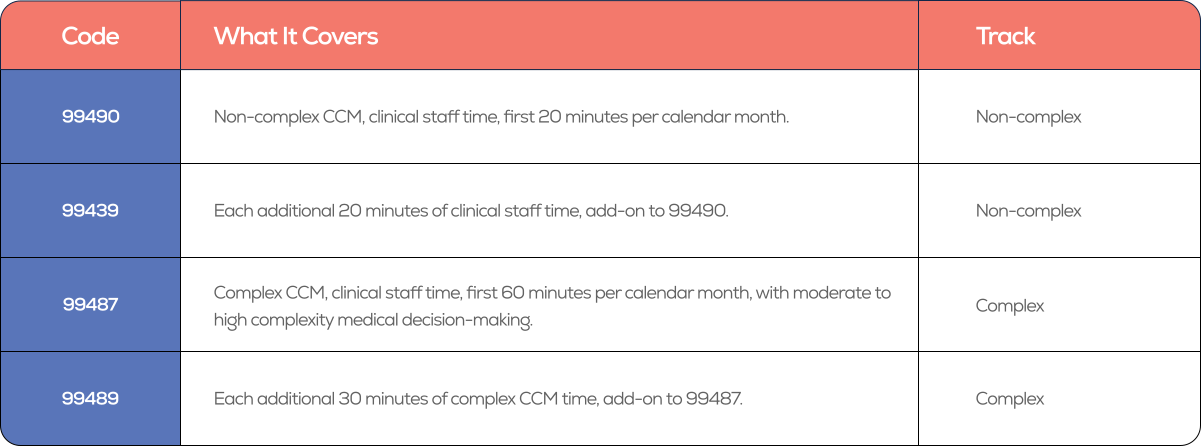
Full CPT Code Breakdown

Every CCM code is defined by minutes of clinical staff time per calendar month. CareNexa’s coordinators log that time as the work happens & does not reconstructed it at month-end.  Your practice bills what was actually delivered, with the documentation already attached.

Patient eligibility

Two or more chronic conditions expected to last at least 12 months, or until the death of the patient, that place the patient at significant risk of death, acute exacerbation or decompensation, or functional decline.

What is included:

  • Monthly 20-minute care management calls 
  • Comprehensive care plan creation 
  • CPT qualification tracking and audit-ready documentation 
  • Billing under the CCM codes 
  • Zero device or setup cost to the practice 

Sample Patient Journey — Month to Month

Enrollment isn’t the finish line; it’s the start of a recurring monthly rhythm. Here’s what a typical CareNexa patient experiences from identification through ongoing care.

Month 0

Patient is identified as eligible from your EHR panel, contacted, and enrolled with documented consent.

Month 1

Initial comprehensive care plan is built considering conditions, medications, goals, care team contacts and shared back to the practice.

Months 2+

Monthly touchpoint (typically a structured phone call) covers medication adherence, symptom check-in, and care plan updates; time is logged and billed under the appropriate CCM code.

As needed

Any concerning finding is escalated to the practice per the agreed protocol we ensure that the practice is looped in, not surprised.

The Revenue Math, Shown Transparently

Enrolled Patients
Per month, low 
Per month, high
Per year, low
Per year, high
50
$2,000
$6,000
$24,000
$72,000
100
$4,000
$12,000
$48,000
$144,000
150
$6,000
$18,000
$72,000
$216,000

The number that bills 

Enrolled and sustaining are different figures, and only the second one produces revenue. A patient who enrolls in March and disengages in May bills for two months, not twelve. Any model built on enrollment rather than sustained participation overstates the result, which is why we show the method rather than a single headline. 

Chronic Care Management-Specific FAQ

What if a patient wants to leave the program?

Patients can disenroll at any time, CCM is voluntary. We update their status in the platform immediately and notify your practice; no further time is billed for that patient going forward.

CCM reimburses time spent on care coordination between visits including the calls, medication checks, and plan updates that don’t happen in an exam room. It runs alongside regular visits, not instead of them.

Done correctly, structured CCM documentation is more audit-defensible than ad hoc care coordination, because every billed minute is time-stamped and tied to a specific, coded activity. The risk CMS penalizes is under-documented time, which is the specific failure mode this workflow is built to avoid.

Get More from Patients Already Enrolled

Many patients who qualify for CCM also qualify for RPM and vice versa. Running both programs on the same patient means coordination time and monitoring time are tracked and billed separately, through one clinical team and one dashboard, instead of running two disconnected programs.